Finding a Polynesian Tattoo Artist in Sydney's Inner West
An honest guide from a Fijian tattoo artist on King Street, Newtown — how to tell a real Polynesian artist from someone copying flash off Pinterest, what to ask at a consult, and why the inner west is where to look.
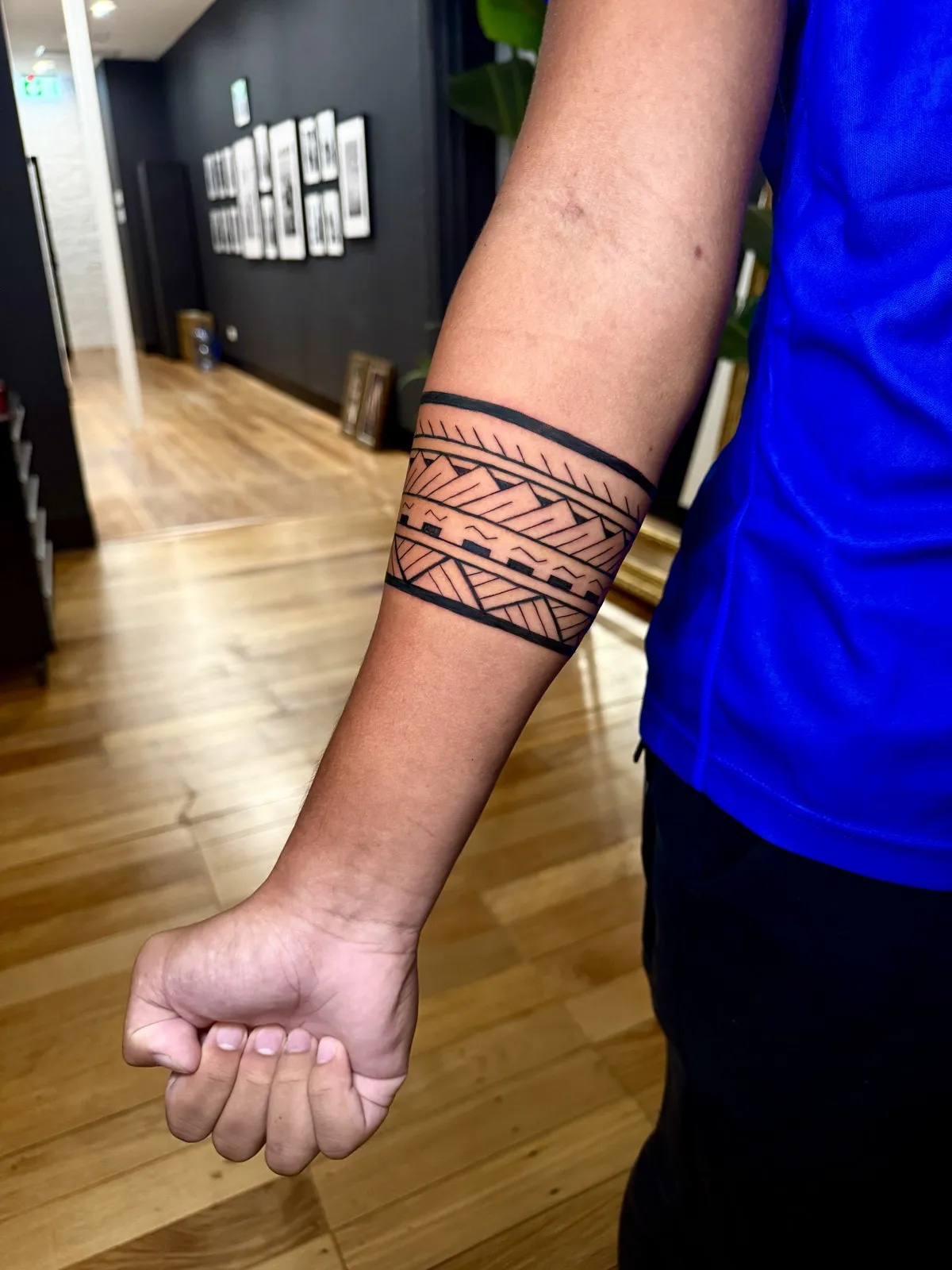
Every week or so, someone messages me after they've already spent an afternoon falling down a rabbit hole of Pinterest boards and Instagram tags, more confused than when they started. They know they want a Polynesian piece. What they don't know is how to tell a real Pacific artist from someone who's good at copying flash off a sheet.
I'm Amz — a Fijian tattoo artist working out of Memento on King Street, Newtown. I do a lot of custom Polynesian, Fijian and Pacific-island work, so this is the conversation I have all the time. Here's how I'd tell a mate to go about it, with no spin.
What actually makes a Polynesian artist worth your time
"Polynesian" is not one look. It's a whole family — Samoan, Tongan, Maori, Tahitian, and then Fijian sitting in the Melanesian tradition next door. Each one has its own motifs, its own logic, and its own things you genuinely shouldn't get wrong. So the first thing I'd look for is whether an artist can tell you which traditions they actually work in, instead of treating it all as one generic tribal style.
Three things separate the real deal from the rest:
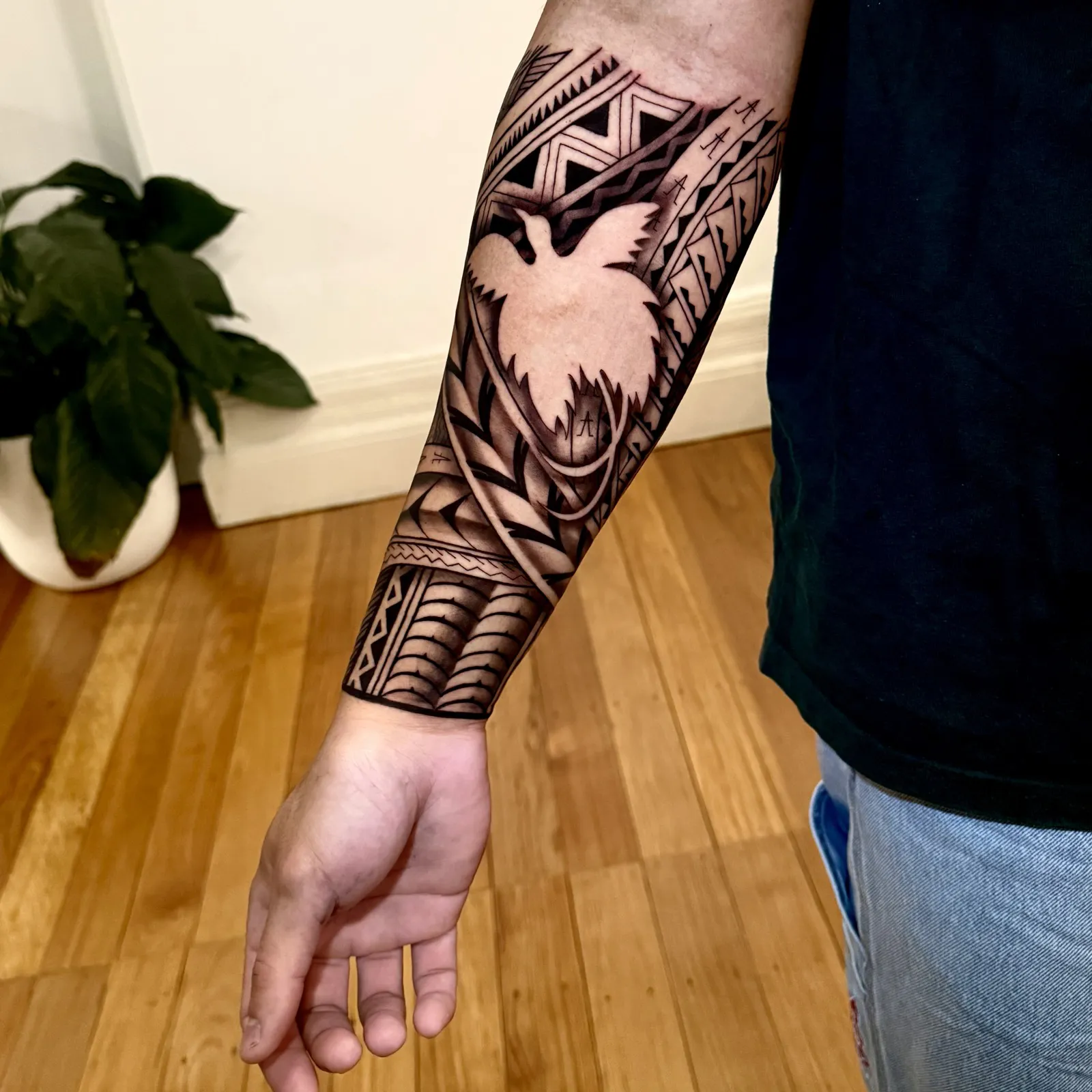
- They design custom, not off a sheet. Genuine Polynesian work is built around you — your body, your story, the people you carry. If an artist is pulling a stock design off a wall and resizing it to fit, that's not Polynesian tattooing, that's a pattern. The motifs are supposed to mean something specific to the person wearing them.
- They work freehand, at least partly. A lot of my Pacific pieces get drawn straight onto the skin with a marker before any needle touches you. That's how the design flows with the muscle and movement of the body instead of sitting on top of it like a sticker. Not every artist freehands everything, but if someone only ever works from a printed stencil for big tribal pieces, ask why.
- They can speak to the meaning. This is the big one. The reason I lean on my background isn't a sales line — it's that when you ask me what a motif represents, I can actually tell you, and I'll steer you away from putting something on your skin that doesn't sit right.
When you're scrolling someone's portfolio, look for range and consistency. Can they do clean, confident black linework? Do their pieces wrap the arm and shoulder properly, or do they look flat and pasted on? Healed photos matter more than fresh ones — fresh tattoos always look sharp; the test is how the work sits six months later.
Genuine Polynesian work is built around you — your body, your story, the people you carry. A pattern off the wall is just a pattern.
Why the inner west, and Newtown in particular
If you're searching around Sydney, the inner west is honestly one of the better places to be looking for this kind of work. Newtown has a real density of custom and Pacific-leaning artists — it's an arts neighbourhood, King Street is wall-to-wall studios, and the culture here rewards people doing their own distinct thing rather than churning out the same flash everyone else has.
Practically, that means a couple of things for you. You can usually see a few artists' work in person without driving across the city, and you're a short walk from Newtown station whether you're coming in from the city, the west or the inner south. For a piece you'll wear for life — and one that often takes a few sessions — having your artist a manageable trip away genuinely matters. You don't want a half-finished sleeve and a two-hour commute standing between you and the next sitting.
The questions to actually ask at a consult
A consult is where you find out if an artist is right for you — and a good one should be free and no-pressure. I do mine in person, over the phone, or by video, whatever suits. Here's what I'd walk in ready to ask:
- "Which Pacific traditions do you work in, and which are you most confident with?" You want a straight answer, not a vague "all of it."
- "Will this be designed custom for me?" And follow up: will it be drawn freehand on the skin, or from a stencil? Both can be valid — you just want to understand the approach.
- "Can I see healed work, not just fresh photos?" The healed result is the real product.
- "What does this design mean — and does anything I've asked for clash with the tradition?" A real Pacific artist will happily get into this with you.
- "What's the honest sitting estimate and total cost?" Which brings me to the part everyone's too polite to ask about.
Tip
A word on price, honestly
Sydney is not a cheap city for tattooing, and you shouldn't want it to be. In 2025 most reputable artists here charge roughly $180 to $250 an hour, and genuine specialists can sit above that. A proper custom half-sleeve isn't a one-sitting job — it's built over a few sessions, so think in the hundreds-to-low-thousands rather than a single small number.
If someone quotes you a suspiciously cheap flat price for a big custom Pacific piece, that's a flag, not a bargain. It usually means a stock design, rushed linework, or corners cut on hygiene. The work you'll wear for the rest of your life is not the place to chase the lowest quote. I'll always give you an honest estimate at the consult so there are no surprises when you sit down.
A bit about me
I'm Ameo — most people call me Amz. I'm Fijian, and I tattoo out of Memento on Level 5, 292 King Street, Newtown. Most of what I do is custom Polynesian, Fijian and wider Pacific-island work, alongside blackwork, fine-line and black-and-grey. Everything I do starts with a conversation, not a price list — because if I don't understand what you're carrying and why, I can't build you something that's truly yours.
If you want to read further before you decide, I've written more about my Fijian work and about Polynesian tattooing here in Sydney.
Come in for a yarn
The best way to know if I'm the right artist for your piece is simply to talk. My consults are free, there's zero pressure, and you can do it in person, over the phone or on video — whatever's easiest for you. Bring your ideas, your references and your questions, and we'll work out together whether your idea and my hand are a good fit.
When you're ready, book a free consult and let's have a proper chat about it.
Common questions
Answered before you ask
- How much does a Polynesian tattoo cost in Sydney?
- Most reputable Sydney artists charge between $180 and $250 an hour in 2025, with specialist work sometimes more. A half-sleeve in true custom Polynesian style usually runs across a few sessions, so think in the hundreds-to-low-thousands range rather than a single small fee. Be wary of anyone quoting a cheap flat price for a big custom piece — for proper Polynesian work the design is drawn for you, not pulled off a sheet. At my consults I'll give you an honest sitting estimate before you commit a cent.
- What's the difference between Polynesian and Fijian tattooing?
- Polynesian is the broad family — Samoan, Tongan, Maori, Tahitian and more — each with its own motifs and rules. Fijian (Melanesian) work has its own distinct visual language. I'm Fijian, so I can speak to that tradition directly, but I tattoo across the wider Pacific style too. The honest move is to ask any artist which traditions they actually know, rather than treating 'Polynesian' as one generic look.
- Do I need to be of Pacific heritage to get a Polynesian tattoo?
- No — but the meaning matters, so it's worth a real conversation. At a consult I'll ask what's drawing you to the style and what you'd like the piece to represent, then design something that's respectful and genuinely yours rather than copied. That's the whole point of working with someone who knows the culture from the inside.
- Where in Sydney's inner west can I find a Polynesian tattoo artist?
- Newtown and the surrounding inner west have a real cluster of Pacific and custom artists. I work out of Memento Tattoo on Level 5, 292 King Street, Newtown — a few minutes from Newtown station. A free consult is the best first step, in person, by phone or over video.