How the Custom Tattoo Design Process Works
From a loose idea to finished ink — here's exactly how I build a custom tattoo, and why the process matters as much as the result.
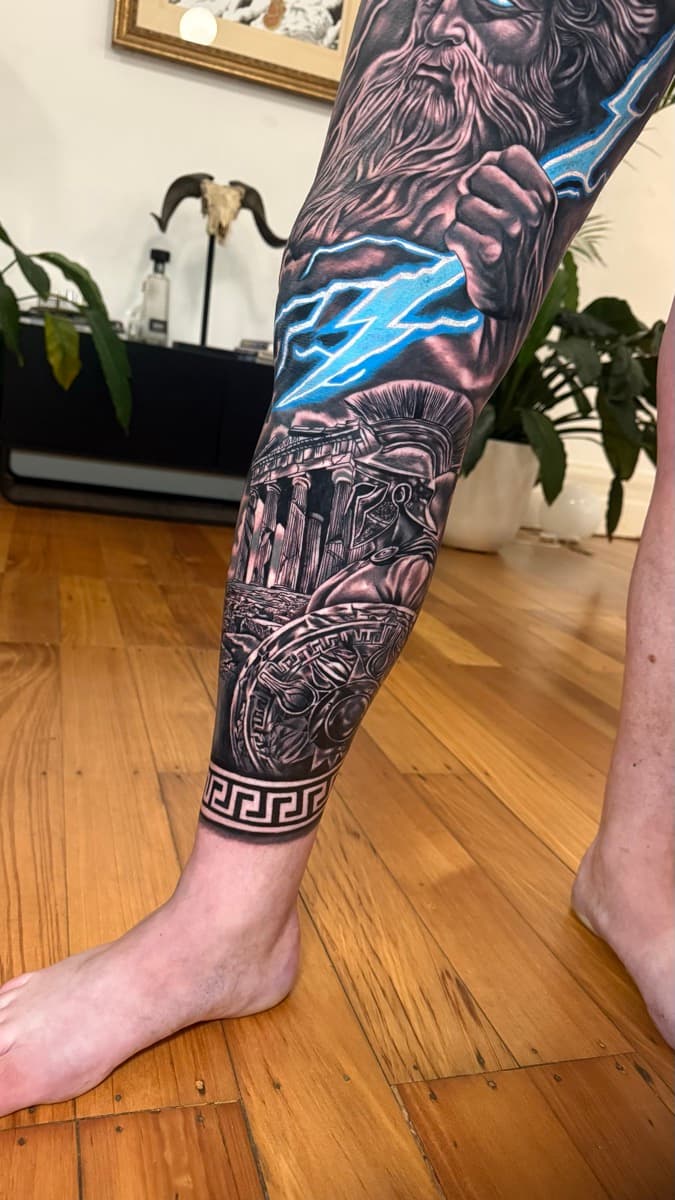
Every tattoo I do is custom. That doesn't mean I'm opposed to flash or pre-made work — it just means that's not what I do. Every piece that leaves the studio is built from scratch for the person wearing it.
Here's how that process actually works, from the first conversation to the final session.
The Brief
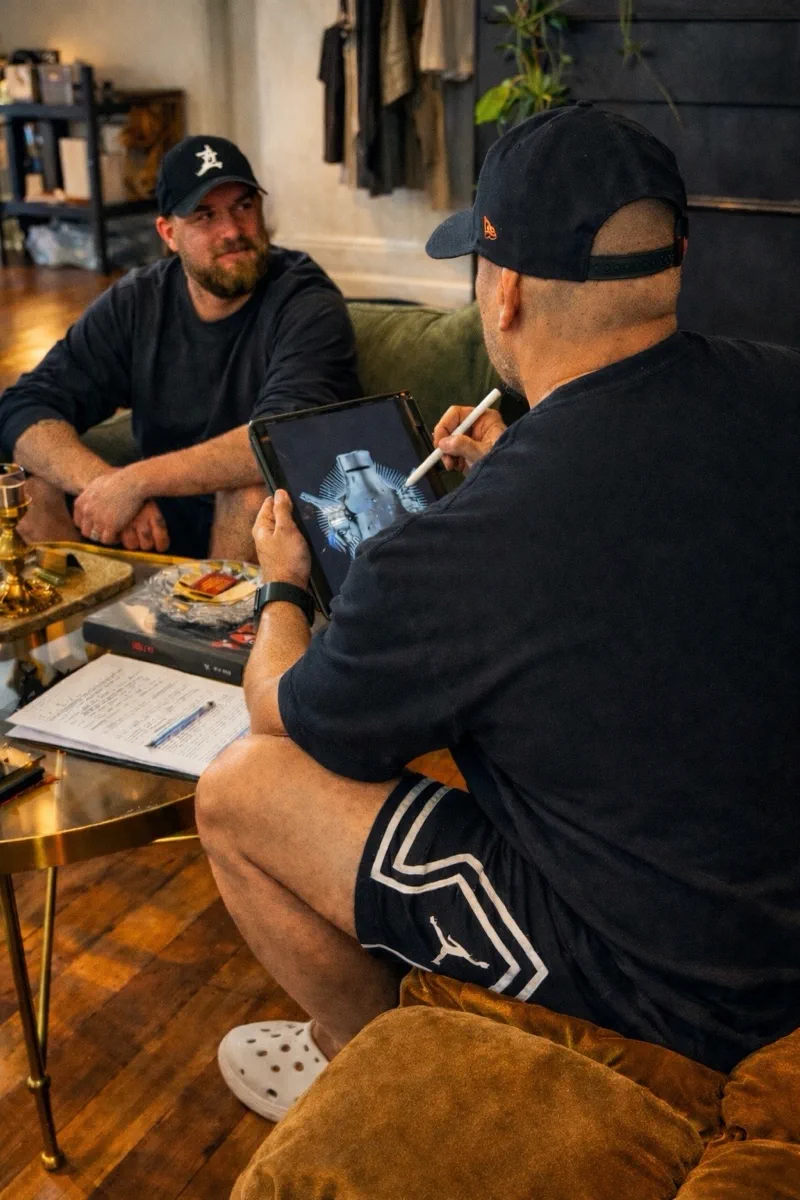
It starts with your idea. And your idea doesn't need to be fully formed — most people arrive with something loose. A theme. A few photos on their phone. A feeling. Something like "I love blackwork but I don't want it too harsh" or "I want it to represent growth somehow." That kind of starting point is plenty.
My job is to take a loose idea and turn it into something specific, intentional, and designed for your body.
During our conversation, we also cover the practical stuff:
- Placement — where the tattoo will live on your body
- Size — how much space the design needs to work well
- Style — the visual approach I'll take
- Budget — what's realistic for the scope of the piece
This chat takes 20–30 minutes. By the end, I know exactly what I'm designing.
Research and Drawing
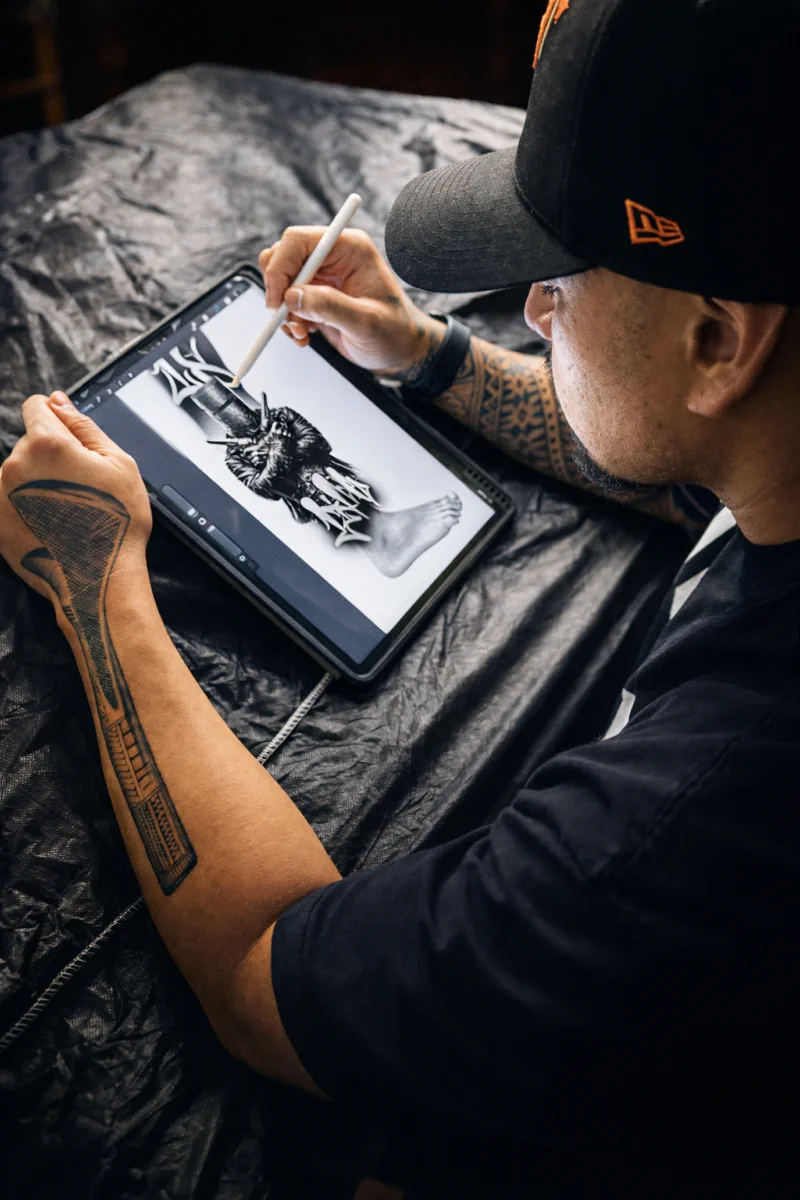
After we talk, I disappear into the design phase. This is the part you don't see — and it's where most of the creative work happens.
For a custom piece, I typically spend time on:
- Reference research — studying the subject, the symbolism, existing art in the style
- Compositional sketching — figuring out how elements sit together and flow with the curves of your body
- Technical planning — making sure the design will actually work on skin. Not everything that looks good on paper translates. Line weights, contrast, spacing — all of this affects how a tattoo reads in five years, not just today.
A good tattoo design isn't just art — it's engineering for skin. Every line, every shadow, every detail has to earn its place and survive the medium.
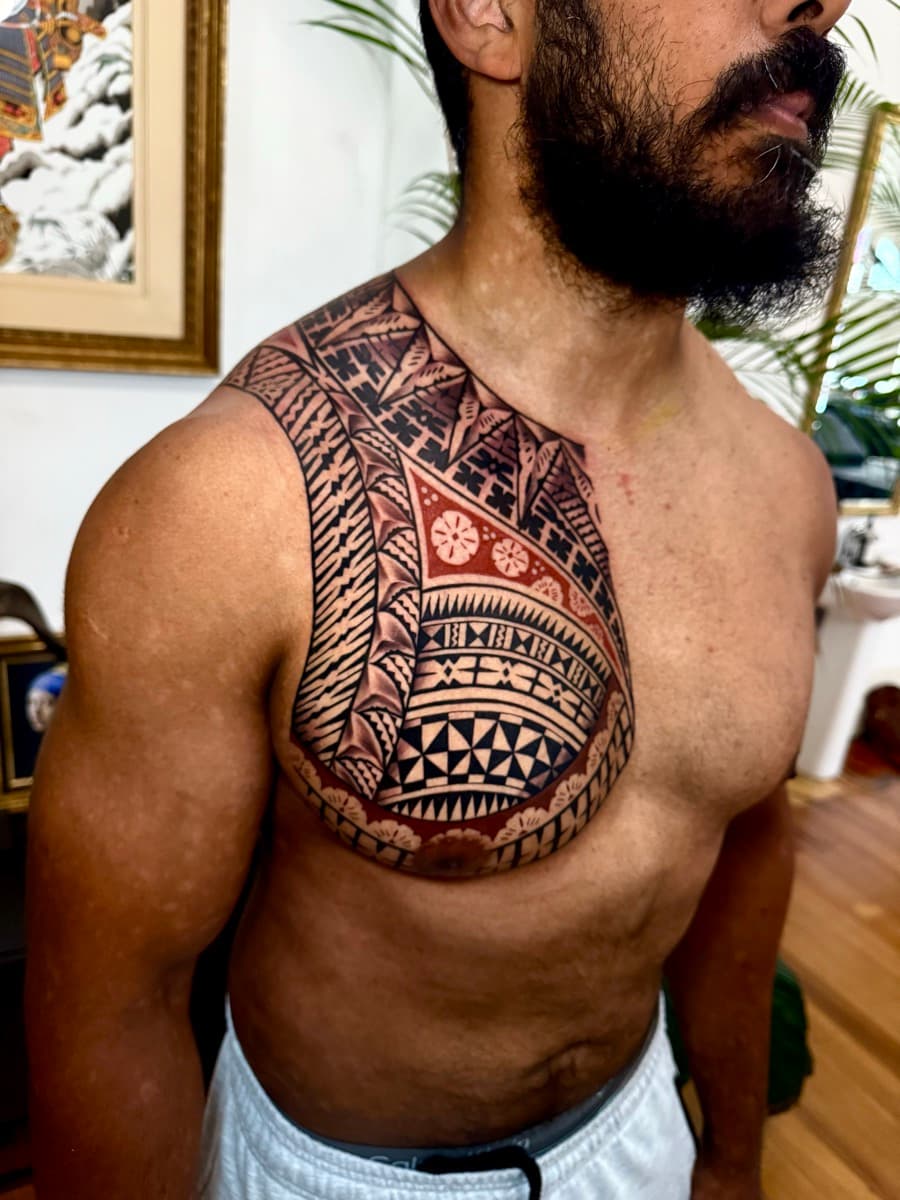
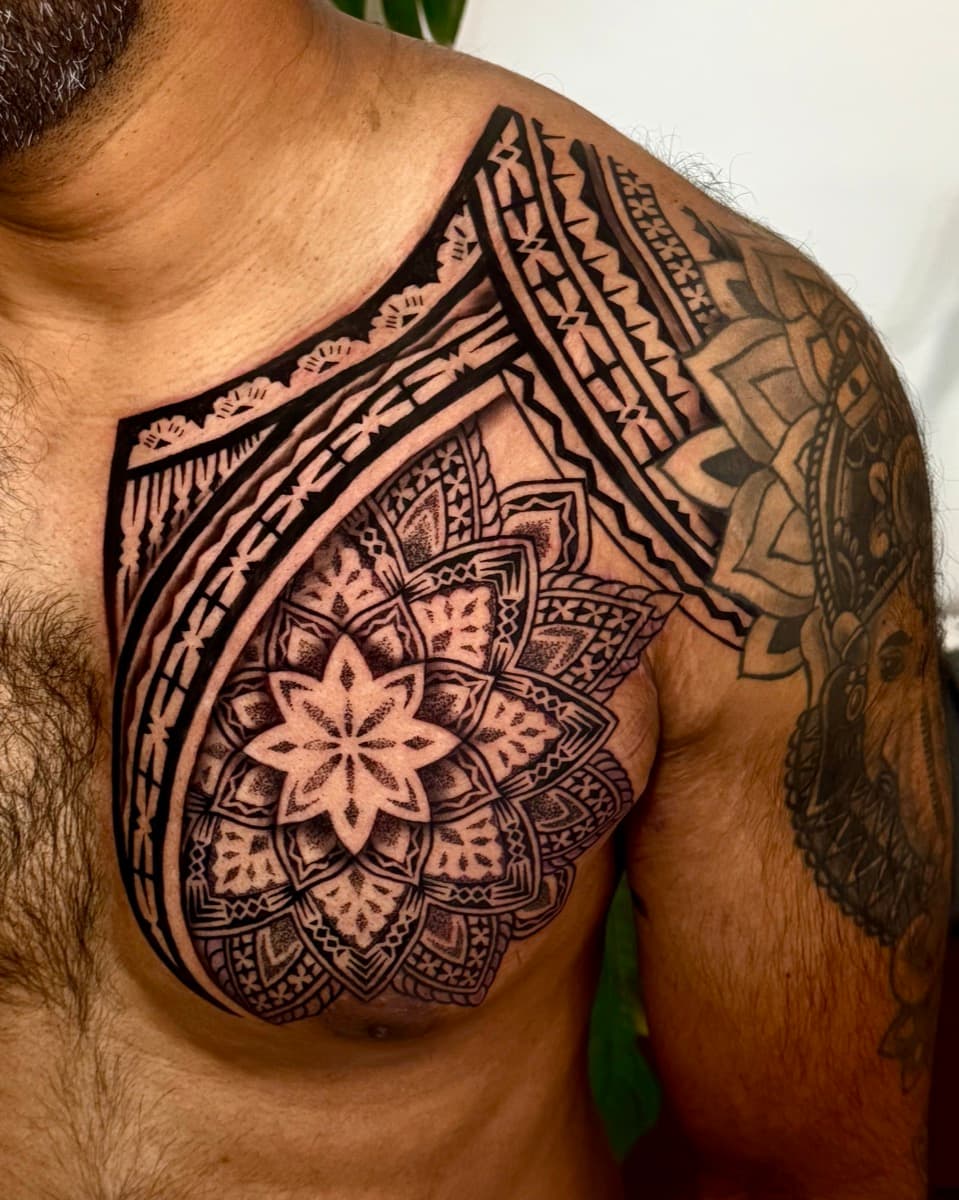
This phase takes anywhere from a few hours to several days. A small wrist piece might take an afternoon. A Polynesian half-sleeve might take a week of careful composition. I don't rush it.
Seeing the Design
I send you the design a few days before your appointment. This gap is deliberate — I want you to sit with it, not react in the moment.
When you're reviewing, think about:
- Does the overall shape feel right? Look at the whole composition before nitpicking details.
- Does it capture what you wanted? Not just visually — does it feel like the meaning you described?
- Is there anything that feels off, even if you can't articulate exactly what?
Tip
Trust your gut. If something doesn't sit right, tell me. You get up to 2 rounds of revisions included in the process — and I'd genuinely rather refine than tattoo something you're unsure about. Some of my best work has come after a round of "I love it, but could we try..." feedback.
Most designs need one or two tweaks. Some are right on the first pass. Either way, I don't book the session until you're genuinely excited.
Stencil Day
On the day of your appointment, the design gets transferred to a stencil — a temporary, purple-ink version applied directly to your skin.
This is about position and flow:
- How does the design sit with your natural body lines?
- Does it look balanced when you move?
- Is the scale right, now that you see it on yourself?
I watch how you look at it. If there's hesitation, we reposition. We can do this as many times as needed. Stand up, walk around, check it from the angles you actually see yourself from — not just straight-on in the mirror.
The Session
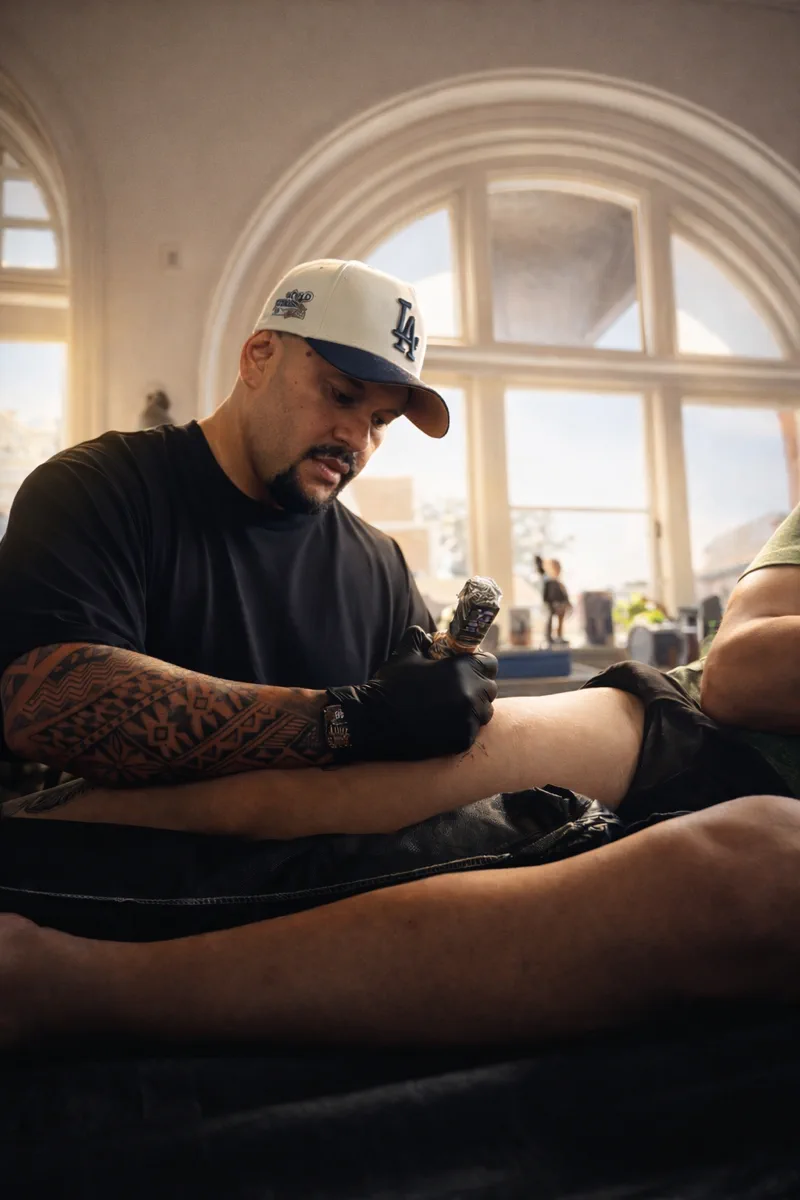
The tattooing itself follows a rhythm:
- Outline. Clean lines that establish the structure. This is usually the sharpest-feeling part.
- Shading and detail. Building depth, texture, dimension. More of a vibrating sensation.
- Refinement. Small adjustments, highlights, final touches.
Here's what makes custom work different from a stencil-and-go: I adapt the design to your body in real time. A shadow that looked right on paper might need adjusting to follow a muscle contour. A line might want to curve slightly differently than I drew it. The design is alive until it's finished.
Why Custom Is Worth It
Pre-made designs have their place. But a custom piece gives you something nobody else has — a design that was built for your body, your meaning, your aesthetic.
It takes longer. It costs more. But the result is a tattoo that feels unmistakably yours. And years from now, when someone asks about it, you won't just describe the image — you'll tell them about the conversation that started it, the sketch that surprised you, the moment it all came together on your skin.
That's the kind of tattoo I want to make.
If You're Thinking About It
The next step is just a conversation. You can book a consultation through the site, or send me a message with your idea — even if it's rough. No commitment, no pressure. Just a chat about what you're after and whether we're a good fit.
I'm at Memento most weekdays. Come say hello.
That conversation starts here: book a free consultation — phone, video, or in person — or browse the portfolio first to see how finished pieces turn out.