Polynesian Tattoo Symbols and Their Meanings
The symbolism behind Polynesian tattoo art runs deep. Here's what the patterns mean, how they work together, and how I approach them at the studio.
Polynesian tattooing is the tradition that literally gave the world the word "tattoo" — from the Samoan tatau. It's one of the oldest forms of body art on earth, and it's one of the styles I'm most passionate about.
I work on a lot of Polynesian pieces at Memento. Some clients have deep Pacific Island heritage and want work that honours their lineage. Others are drawn to the visual power of the patterns and want something meaningful without appropriating. Both are valid starting points — but both require care.
This guide covers the core symbols, what they mean, and how I approach this work.
Respect First
For clients with Polynesian heritage, the design process often starts with family — your lineage, your island, your story. The tattoo maps who you are.
For clients without that heritage, I work differently. We adapt elements rather than copying sacred patterns. We talk openly about intention. Sometimes I'll suggest alternative approaches that capture what someone loves about Polynesian art without overstepping. Honesty at this stage is more important than a sale.
The Core Symbols
Ocean Patterns
The ocean is everything in Polynesian culture. It provided food, connected islands, carried ancestors between worlds. In tattoo art, ocean patterns represent:
- Life and constant change — water moves, never the same twice
- The journey between worlds — in many Pacific traditions, the ocean carries the dead to the afterlife
- Abundance — the sea provides
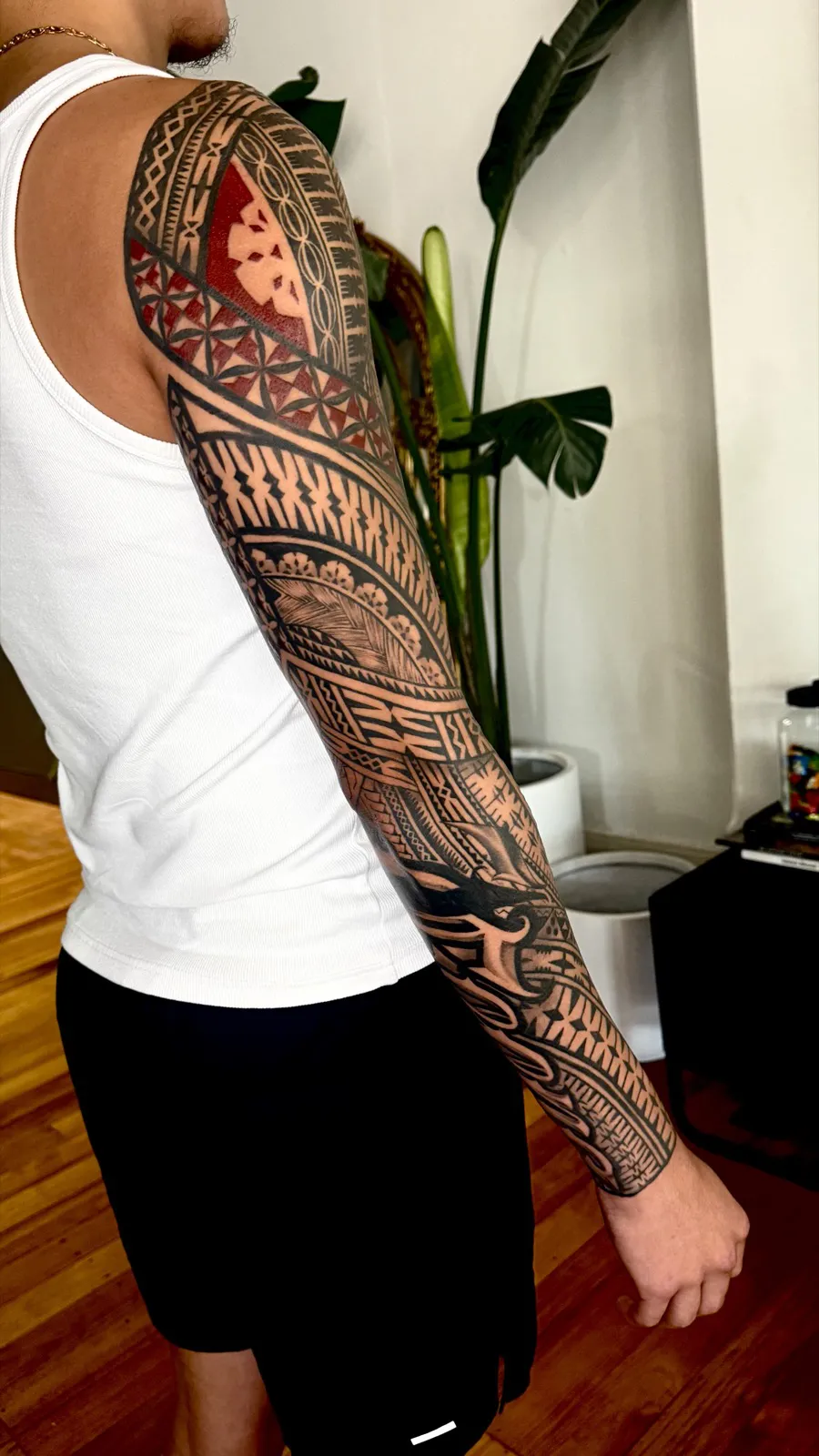
I use ocean motifs as flowing, layered wave patterns between other elements. They're the connective tissue of a larger piece — they make everything feel cohesive, like the design is moving.
The Sun
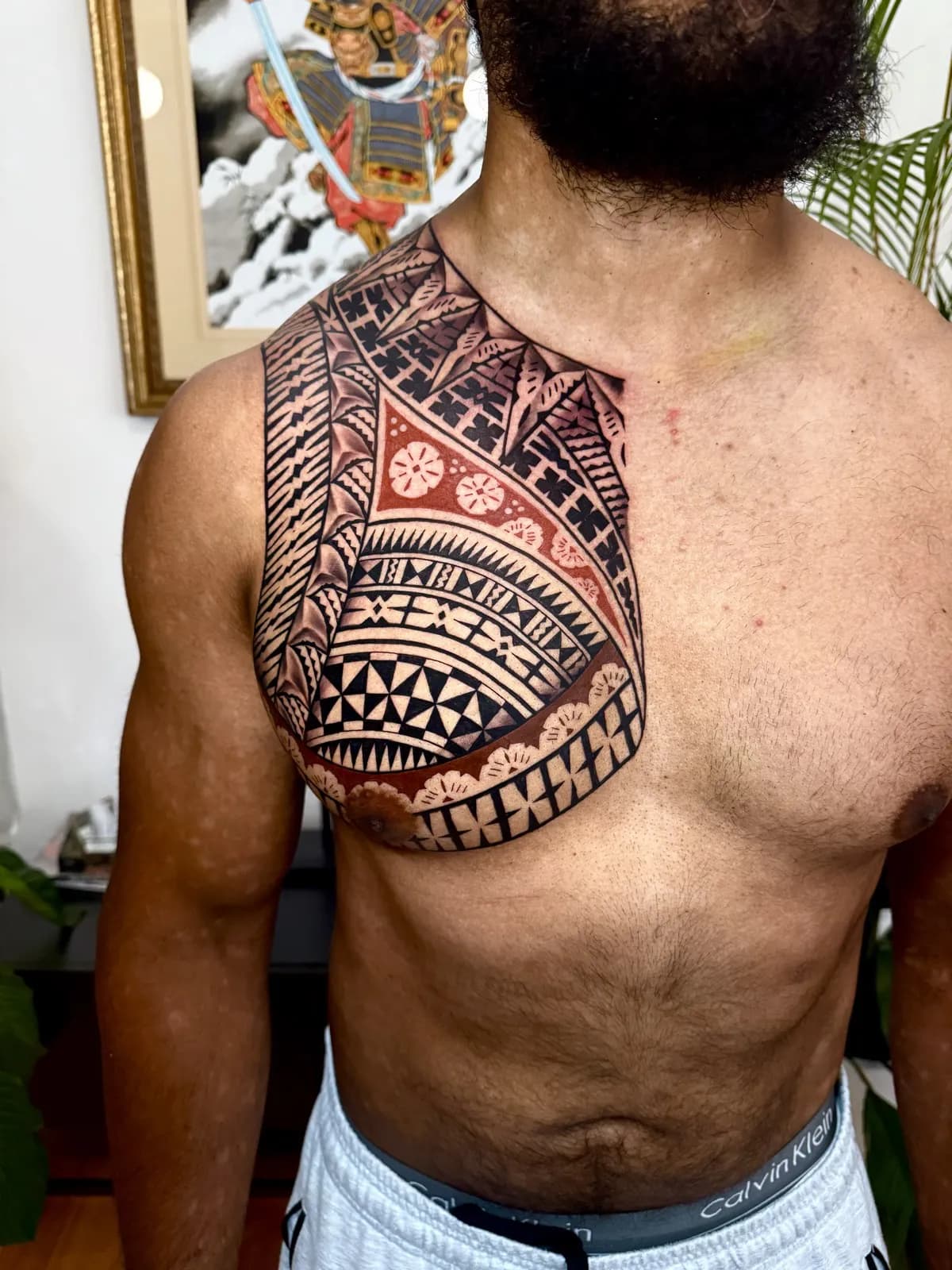
The sun is leadership, renewal, greatness. It rises above everything, returns every day. In a composition, I typically place sun elements at a high point — the shoulder, the chest, the upper back — because that's where the narrative of the tattoo reaches upward.
- Leadership and brilliance
- Eternal renewal — the daily cycle as a symbol of rebirth
- Aspiration — reaching toward something
Every Polynesian tattoo tells a story. The symbols aren't decoration — they're a visual language that maps identity, values, and life journey onto the body.
Spearheads
One of the patterns I use most often. Spearheads mean courage, warrior spirit, sharpness of mind. They create rhythm and direction in a design — rows of spearheads along a band give the piece a sense of forward movement.
- Courage and protection
- Sharpness of purpose
- Forward momentum
The Turtle (Honu)
Turtles are significant across Pacific Island cultures. They navigate vast oceans with precision, live long, and carry their home on their back. In tattoo art:
- Navigation and direction
- Longevity and wellness
- Family and shelter — the shell as home
I often build turtle shell patterns into larger designs, with each section of the shell carrying its own symbol. It's one of the most versatile Polynesian elements.
Tiki Figures
Tiki are stylised ancestral figures — guardians from the spirit world. They represent protection, fertility, and defiance against harm.
Tip
Tiki are among the most culturally specific Polynesian symbols. Their forms and placements carry meaning tied to particular islands and lineages. If tiki are important to your design, we'll spend time discussing their origins and making sure they're used appropriately.
Shark Teeth (Niho Mano)
The most versatile Polynesian pattern. Shark teeth appear in nearly every Pacific Island tattoo tradition. They mean adaptability, strength, protection — the shark as a guardian figure.
The geometric, repetitive nature of shark teeth makes them brilliant for filling space and creating visual texture. I use them in almost every Polynesian piece I do.
The Lizard
Lizards and geckos represent communication with the gods, good fortune, and protection. In traditional belief, lizards carried messages between the human and spirit worlds. They're often placed where they feel alive in the design — crawling along a contour, emerging from a pattern.
Stingray
Stealth, grace, adaptation. The stingray moves through any environment without force. It defends itself when needed, but never with aggression. It's a symbol I suggest often for clients who resonate with quiet strength.
How the Symbols Work Together
Individual symbols are meaningful. But a Polynesian tattoo is a composition — the arrangement, direction, and relationship between elements tell a story that's greater than any single pattern.
A design might place ocean at the base — your origins, where you come from. Rising through spearheads and shark teeth — challenges you've faced. Toward a sun at the shoulder — where you're heading. The composition has direction, narrative, intention.
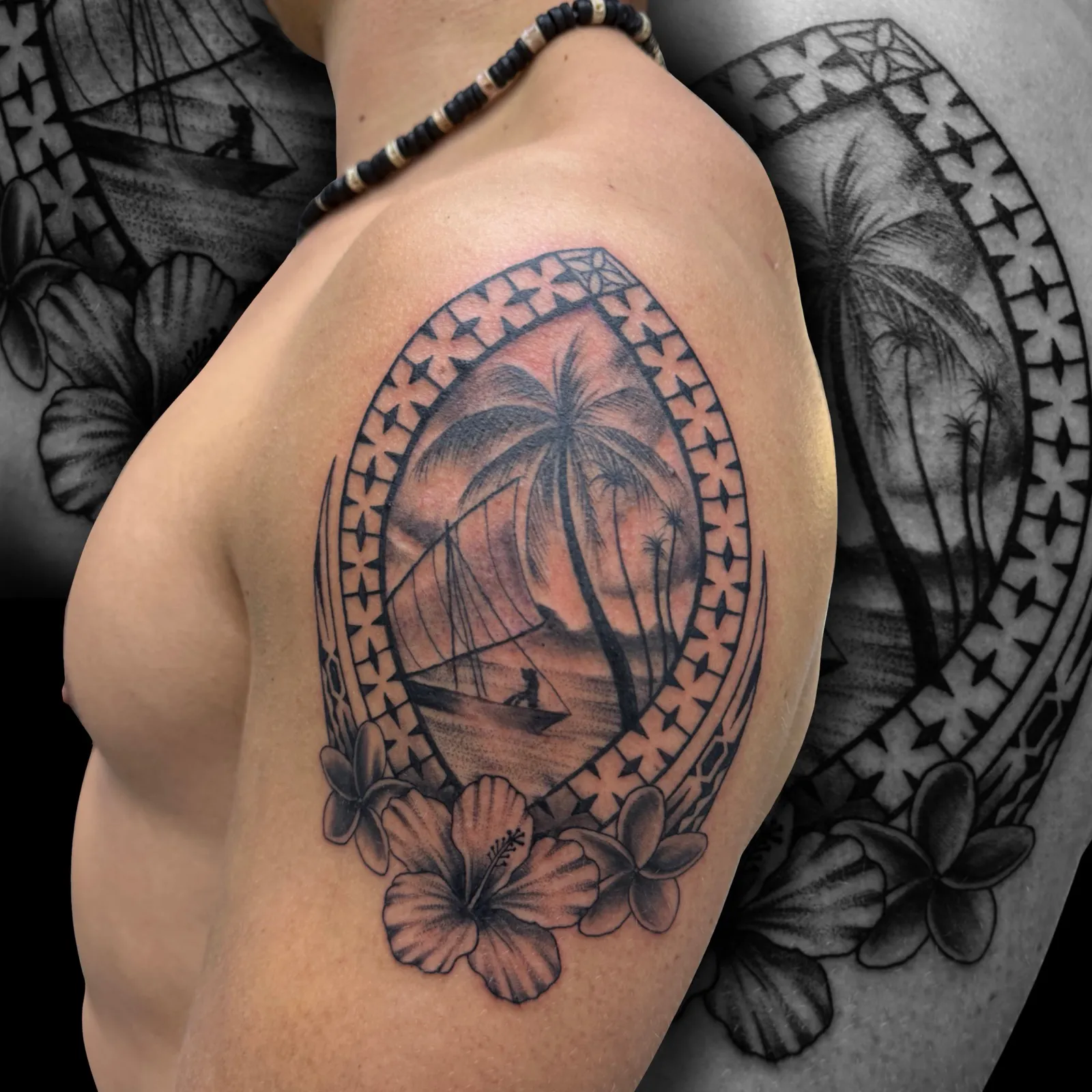
This is why I spend more time in the design phase for Polynesian work than almost any other style. The research matters. The conversation matters. Getting it right matters.
The Major Traditions
"Polynesian" actually encompasses distinct traditions, each with their own rules and visual language:
- Fijian — geometric forms, dense banding, sacred symbolism rooted in Melanesian and Polynesian crossover
- Samoan (Tatau / Malu) — bold, geometric, traditionally covers from waist to knee
- Maori (Tā Moko) — curved, flowing lines with spirals (koru), traditionally facial
- Hawaiian (Kakau) — asymmetric, bold black, strong geometric forms
- Marquesan — intricate, densely detailed, centered compositions
- Tongan — geometric repetition, fine linework
I study these distinctions seriously. If a client asks for "Polynesian" without a specific tradition in mind, part of my job is helping them understand the differences and find the right fit.
Fijian Style — A Personal Connection
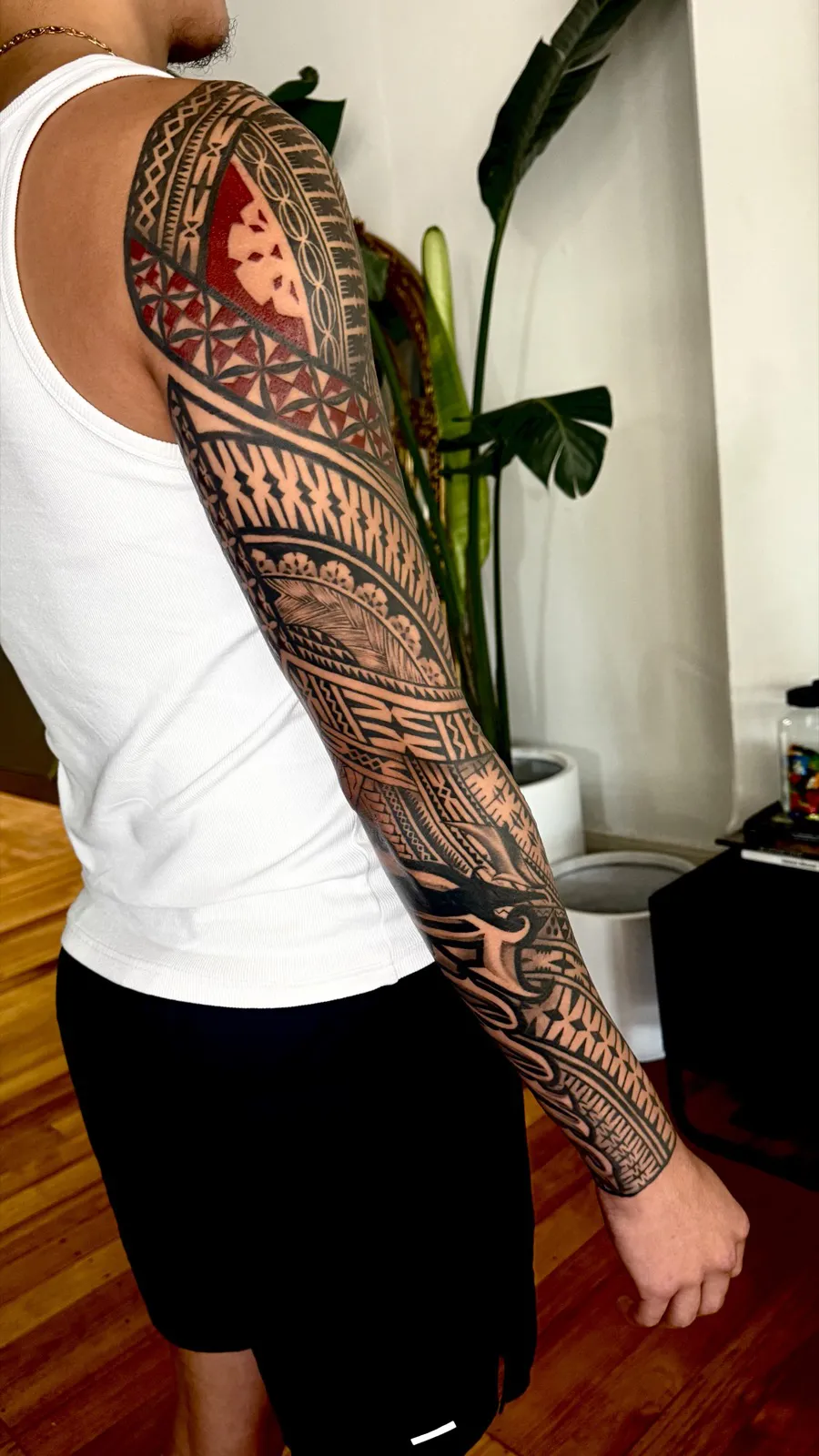
Fijian traditional tattoo — known as gatu — was once widespread across the islands and held deep ceremonial significance. Like much Pacific tattooing, it was suppressed by colonial-era missionary activity and largely disappeared from practice for generations. The revival of Fijian tattooing is ongoing, and working within that tradition is something I take seriously.
Visual Language
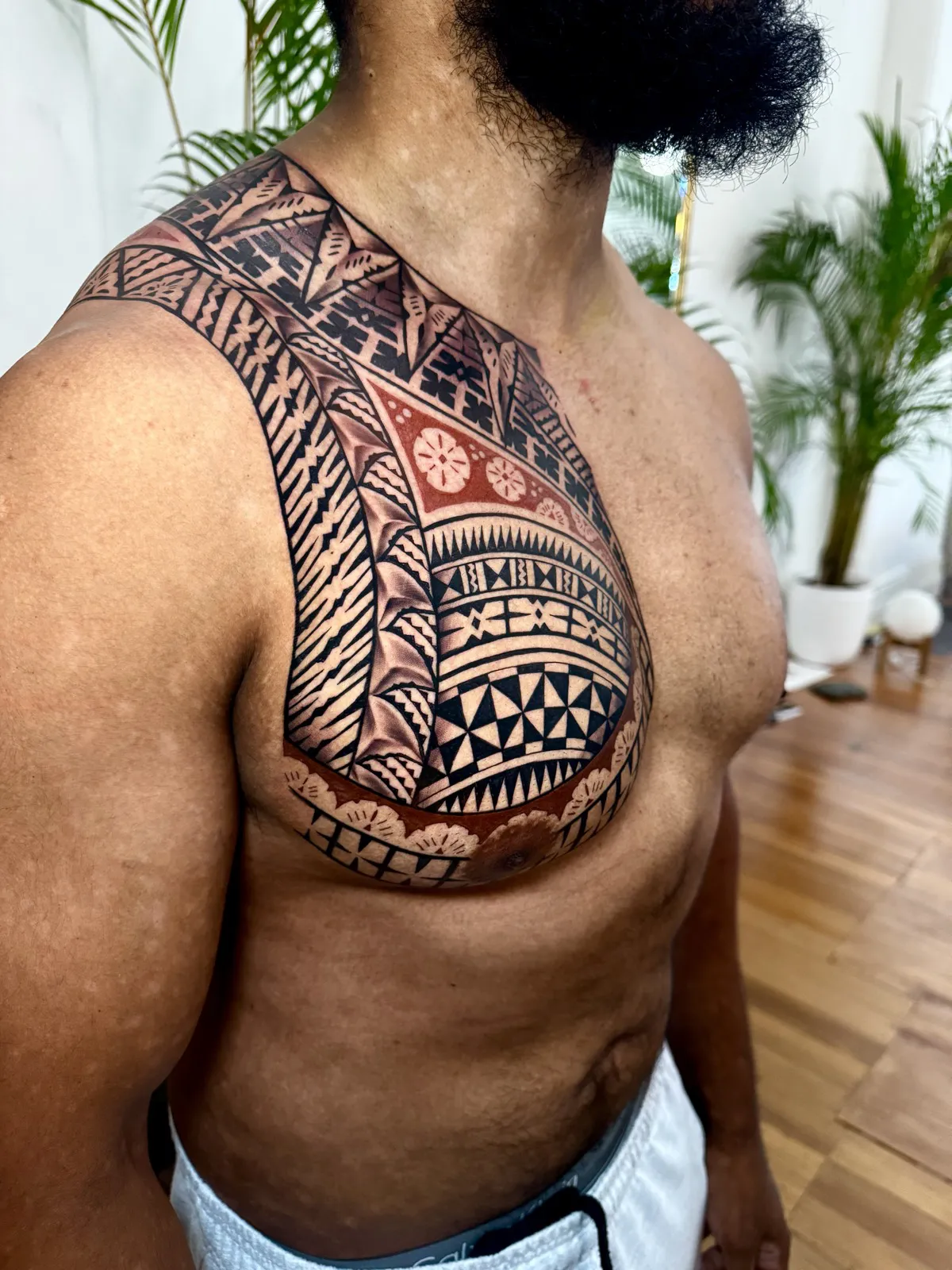
Fijian designs are bold, geometric, and built from repeating structured forms. Where Samoan tatau reads as dense solid coverage and Maori tā moko flows with spirals, Fijian work is characterised by:
- Banded geometric patterns — horizontal and diagonal bands of interlocking forms that wrap the body's contours
- Dense blackwork — bold filled sections alternated with fine negative space, creating strong visual contrast
- Grid and diamond motifs — rectangular forms reflecting the weaving patterns of traditional masi (barkcloth) designs
- Chevron and triangular compositions — repeating angular forms that create rhythm across a large body area
The influence of masi is significant. The same geometric logic that appears in bark cloth — checkerboards, interlocking triangles, diamond lattices — translates directly into skin. There's a visual connection between what Fijian women have woven for centuries and what is now being tattooed.
Symbolism
- Protection and strength — banding across the upper body was traditionally linked to warrior status
- Ancestral connection — specific patterns reference family lineage and island origin
- Transition and rites of passage — tattooing marked significant life moments, including coming of age
- Community identity — designs identified a person's village, clan, and social standing
My Approach
Because Fijian tattooing sat dormant for so long, there's a real responsibility in working within this tradition today. I approach every Fijian-inspired piece with the same care I bring to Samoan or Maori work — researching the client's connection to the islands, understanding what the piece means to them, and drawing on the established visual language rather than improvising.
For clients of Fijian heritage, the design process is collaborative in a different way. We talk about mataqali (clan), about which islands your family comes from, about what the tattoo is meant to say about your lineage. For clients drawn to the aesthetic without that heritage, I work with adapted elements that honour the tradition while being honest about what the piece is and isn't.
Fijian tattooing is the style I've come back to again and again throughout my career. It's where my own roots are, and that shapes everything about how I work with it.
If Fijian style resonates with you — whether through heritage or visual pull — reach out. This is the conversation I'm most ready to have.
Getting Started
If you're drawn to Polynesian tattoo art, here's how I'd suggest approaching it:
- Start with meaning. What do you want this tattoo to say about your life, your values, your journey?
- Be honest about your connection. If you have Pacific Island heritage, tell me about your family and your island. If you don't, tell me what draws you to this art form — we'll find a way to honour it.
- Give it time. These pieces are meant to be significant. Rushing a Polynesian design defeats the purpose entirely.
The richness of this tradition lies in its depth of meaning. When done with care and respect, a Polynesian tattoo carries a weight that purely aesthetic work rarely achieves. That's what makes it worth doing properly.
If this tradition speaks to you — through heritage or pure visual pull — let's talk it through properly. Consultations are free: phone, video, or in person at Memento Tattoo in Newtown. Book a consultation, or see the work first in the portfolio.